

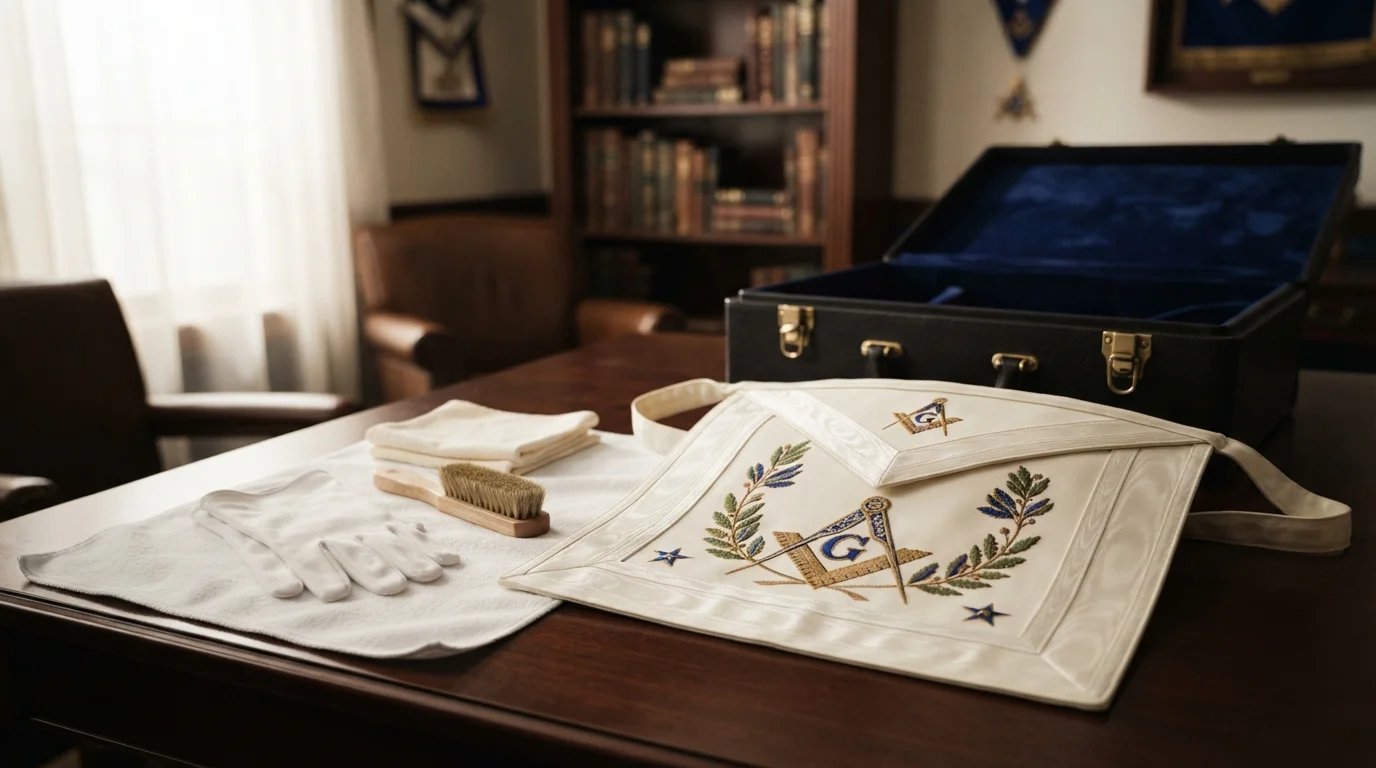
How to Clean and Care for a Masonic Apron
A Masonic apron is an important part of a Freemason's regalia, so keeping it clean and in good condition matters. Regular care helps protect its appearance, embroidery, decorative borders, and other details. However, not every apron can be cleaned in the same way. Lambskin, leather, silk, satin, and other fabrics may require different handling. Before attempting any Masonic apron cleaning, check the manufacturer's care instructions and identify the material. Using an unsuitable cleaning method can cause stains, colour changes, damaged embroidery, or permanent marks. With careful handling and suitable storage, you can help preserve your apron for future lodge meetings and special occasions.
Why Proper Masonic Apron Care Matters
A Masonic apron may feature delicate fabric, decorative embroidery, metallic thread, coloured borders, or other detailed work. These features can become damaged if the apron is handled or cleaned incorrectly.
Good Masonic apron care helps protect the item in several ways.
Protecting Embroidery and Decorative Details
Many Masonic aprons include embroidered symbols, lettering, borders, and other decorative elements. These details may contain delicate threads or materials that can loosen, fade, or become damaged through rubbing and unsuitable cleaning.
Avoid scrubbing embroidered areas or applying cleaning products directly to them without checking the care instructions.
Maintaining the Apron's Appearance
Dust, handling, moisture, and exposure to light can affect an apron's appearance over time. Regular inspection and careful storage help reduce avoidable marks and discolouration.
This is especially important for aprons with light-coloured fabric, metallic decoration, or detailed stitching.
Preventing Avoidable Damage
Incorrect cleaning can lead to problems such as:
- Loose or damaged embroidery.
- Colour fading or bleeding.
- Stiffness or changes in the material.
- Water marks and stains.
- Damaged decorative borders.
- Permanent creases or wrinkles.
Good Masonic apron maintenance is not about frequent washing. It is about handling the apron carefully, removing dust safely, and choosing the right cleaning method when necessary.
Identify Your Masonic Apron Material Before Cleaning
Before cleaning your apron, identify its main material and check whether it has a lining, backing, embroidery, or decorative attachments.
The same cleaning method should not be used for every Masonic apron material. A method suitable for one fabric may damage another.
Lambskin Aprons
A lambskin Masonic apron is made from lambskin leather and requires careful handling. Leather can be sensitive to moisture, unsuitable cleaning products, and excessive heat.
Do not assume that a lambskin apron can be cleaned like an ordinary fabric garment.
For basic care:
- Handle the apron with clean, dry hands.
- Keep it away from unnecessary moisture.
- Avoid rubbing or scrubbing the surface.
- Do not apply household cleaning products or leather treatments without manufacturer approval.
- Seek professional advice if the apron has stains, discolouration, or surface damage.
If your apron is made from lambskin, professional leather care may be a safer option than experimenting with home cleaning methods.
Explore the Lambskin Masonic Aprons collection to see apron styles made from this material.
Silk and Moiré Aprons
Silk and moiré aprons may have a delicate surface, decorative patterns, embroidery, or metallic details. Their appearance can be affected by moisture, friction, heat, and unsuitable cleaning products.
For these aprons:
- Avoid machine washing.
- Do not soak the apron in water.
- Avoid rubbing or scrubbing the fabric.
- Keep it away from direct sunlight during storage.
- Do not apply stain removers without professional advice.
- Use a specialist cleaner experienced with delicate silk and decorative textiles when cleaning is necessary.
Moiré describes a distinctive rippled or watered appearance in fabric. The exact care requirements depend on the fabric construction and any additional decoration.
Satin and Fabric Aprons
Satin and other fabric aprons may look similar, but they can be made from different fibres and blends. Some include embroidery, printed designs, borders, or decorative backing.
Do not decide how to clean an apron based only on its appearance.
Check the manufacturer's instructions to determine whether the material can be cleaned at home or requires professional care. If the apron has no clear care label, ask the manufacturer or a specialist cleaner before using water or cleaning products.
Leather Aprons
Leather aprons require different care from ordinary fabric aprons. The type of leather, surface finish, dye, and construction can all affect how the item should be handled.
Avoid:
- Washing leather in a washing machine.
- Soaking it in water.
- Using household detergents.
- Applying oils, polish, or leather conditioners without approval.
- Using a hair dryer or heater to dry it.
If the leather apron has a stain, colour change, or damaged surface, contact a professional leather cleaner who understands the material.
How to Clean a Masonic Apron Safely
The safest approach to cleaning Masonic regalia is to start with the manufacturer's instructions. If the material or cleaning requirements are unclear, do not experiment.
Follow these steps before deciding whether further cleaning is necessary.
1. Check the Care Instructions
Look for the care label, product information, or instructions supplied with your apron.
Check whether the manufacturer recommends:
- Professional cleaning.
- A specific cleaning method.
- Avoiding water or particular products.
- Special handling for embroidery or decorative details.
- Any restrictions on ironing or heat.
If the apron is handmade, antique, or customised, contact the maker or seller if you cannot find clear instructions.
2. Remove Loose Dust Carefully
If the apron only has light surface dust, you may not need a full cleaning.
Start by placing it on a clean, flat surface. Inspect both sides and check whether any loose threads or decorative details could catch during handling.
Use a clean, soft, dry cloth to gently remove accessible surface dust where the material allows it. Avoid pressing hard, rubbing the embroidery, or pulling on loose threads.
For delicate or fragile aprons, ask a textile specialist before attempting even basic surface cleaning.
3. Handle Stains with Caution
Masonic apron stain removal requires extra care because a stain can affect more than the visible surface.
Food, drinks, moisture, cosmetics, and handling can leave marks. However, applying water or a cleaning product without knowing the material may make the stain worse.
If you notice a stain:
- Avoid rubbing the affected area.
- Do not apply bleach, household detergent, or stain remover.
- Do not soak the apron.
- Check the manufacturer's cleaning instructions.
- Contact a professional cleaner if the material is delicate or the stain does not come away safely.
For lambskin, silk, moiré, and heavily embroidered aprons, professional advice is generally preferable to home stain treatment.
4. Avoid Harsh Cleaning Products
Do not use cleaning chemicals simply because they work on ordinary clothing.
Products such as bleach, strong detergents, solvents, and unapproved leather treatments may affect the colour, finish, fibres, or decorative details.
Avoid applying any product directly to the apron unless its manufacturer confirms that it is suitable.
When cleaning Masonic aprons safely, the priority should be protecting the original material rather than trying to remove every mark at any cost.
How to Store a Masonic Apron
Correct Masonic apron storage is just as important as cleaning. An apron that is stored incorrectly may develop creases, dust buildup, moisture damage, or changes in appearance.
Here are practical ways to protect your apron between lodge meetings.
Keep the Apron Dry
Always make sure the apron is completely dry before putting it away.
Storing a damp apron can encourage mould and mildew, particularly in areas with poor ventilation.
Keep the storage area away from damp walls, leaking roofs, and other sources of moisture. A cool, dry, well-ventilated location is generally preferable.
Avoid Unnecessary Folding
Repeated folding can create permanent creases, especially in delicate fabrics and embroidered areas.
Where practical, store the apron flat or use a suitable hanger that supports its shape without placing pressure on decorative details.
If folding is unavoidable, avoid creating sharp creases across embroidery, borders, or other raised details. For delicate textiles, suitable tissue support may help reduce pressure at fold lines.
Protect Embroidery and Borders
Decorative work can catch on other objects during storage.
To reduce this risk:
- Keep the apron separate from sharp or rough items.
- Avoid placing heavy objects on top of it.
- Protect decorative borders from friction.
- Do not allow metal accessories to press against delicate fabric.
- Handle the apron carefully when placing it inside its storage space.
These small precautions support long-term Masonic apron preservation.
Use a Suitable Storage Case
A suitable Masonic apron case can help protect the apron from dust, accidental contact, and damage while travelling.
Choose a case that provides enough room for the apron without forcing it into a tight fold. Consider the material, closure, internal space, and the level of protection needed for your particular apron.
You can read our guide on Masonic apron cases to learn what to consider when selecting a suitable case.
Avoid storing an apron in a damp case or sealing it away while it is still moist.
Common Masonic Apron Care Mistakes
Even careful owners can damage their aprons by using unsuitable cleaning or storage methods. Avoid these common mistakes.
1. Using Unsuitable Cleaning Chemicals
Household cleaners, bleach, solvents, and unapproved leather products can affect the material and its finish.
Always check the manufacturer's instructions before using a cleaning product.
2. Washing Without Checking the Material
A fabric apron, lambskin apron, and silk apron may require very different care.
Never assume that an apron can be washed simply because it looks like ordinary clothing. Check the material and care instructions first.
3. Applying Excessive Heat
Direct heat can affect delicate fibres, leather, adhesives, and decorative details.
Do not use a hair dryer, heater, or direct ironing to remove moisture or wrinkles unless the manufacturer specifically permits the method.
4. Storing in Damp Conditions
Moisture can contribute to mould, mildew, and deterioration.
Make sure the apron is dry before storage and keep it in a suitable environment with good ventilation.
5. Ignoring Small Signs of Damage
Loose threads, damaged borders, small tears, and early discolouration should not be ignored.
Avoid pulling loose threads or attempting repairs without the right experience. If the apron needs stitching, embroidery repair, or leather restoration, contact a suitable professional.
When Should You Seek Professional Cleaning?
Some aprons need more than basic surface care. Professional cleaning is worth considering when the material is delicate or the apron has visible damage.
Contact a specialist if:
- A stain remains after safe surface care.
- The apron has visible yellowing or discolouration.
- Embroidery or decorative threads are loose.
- The material feels brittle, stiff, or unusually fragile.
- A leather or lambskin surface has developed marks or damage.
- The apron is old, valuable, or has sentimental importance.
- You cannot identify the material or find reliable care instructions.
Choose a cleaner who has experience with the specific material and decorative work on your apron. Explain that it is Masonic regalia and point out any embroidery, metallic thread, leather sections, or customised details.
Ask the cleaner what process they recommend before authorising treatment. If the apron is antique or particularly fragile, a textile conservator may be more suitable than a general clothing cleaner.
Professional advice can help prevent an attempted cleaning from causing permanent damage.
Frequently Asked Questions
Can I wash a Masonic apron in a washing machine?
Do not put a Masonic apron in a washing machine unless the manufacturer specifically confirms that the complete apron is machine washable. Lambskin, leather, silk, moiré, and embroidered aprons can be damaged by unsuitable washing methods. Always check the care instructions first.
How do you clean a lambskin Masonic apron?
A lambskin Masonic apron should be handled carefully because leather can react to moisture and unsuitable cleaning products. Avoid washing, soaking, scrubbing, or applying household chemicals. For stains, marks, or discolouration, contact a professional leather cleaner or the apron manufacturer.
How should I store a Masonic apron?
Store your apron in a clean, dry, well-ventilated location away from direct sunlight and moisture. Avoid unnecessary folding and protect embroidery from pressure or friction. A suitable Masonic apron case can also help protect it from dust and accidental damage.
Can embroidery be damaged during cleaning?
Yes. Embroidery can become loose, faded, or damaged through rubbing, unsuitable cleaning products, and excessive heat. Avoid scrubbing decorative areas and check the manufacturer's instructions before attempting any cleaning. Delicate embroidered aprons may need professional care.
How do I protect a Masonic apron while travelling?
Use a suitable apron case that provides enough space and protects the apron from dust, pressure, and accidental contact. Make sure the apron is dry before packing it. Avoid placing heavy objects on top of the case and do not force the apron into a tight fold.
Conclusion
Proper Masonic apron care starts with understanding the material and following the manufacturer's instructions. Lambskin, leather, silk, satin, and embroidered aprons may all require different handling, so avoid using one cleaning method for every item.
Remove loose dust carefully when suitable, treat stains with caution, and seek professional help when the apron is delicate or damaged. Good storage also matters. Keep your apron dry, protect its decorative details, and use a suitable case when necessary.
With careful handling, appropriate cleaning, and proper storage, you can help maintain your Masonic apron’s appearance and protect it for future lodge meetings and special occasions.