


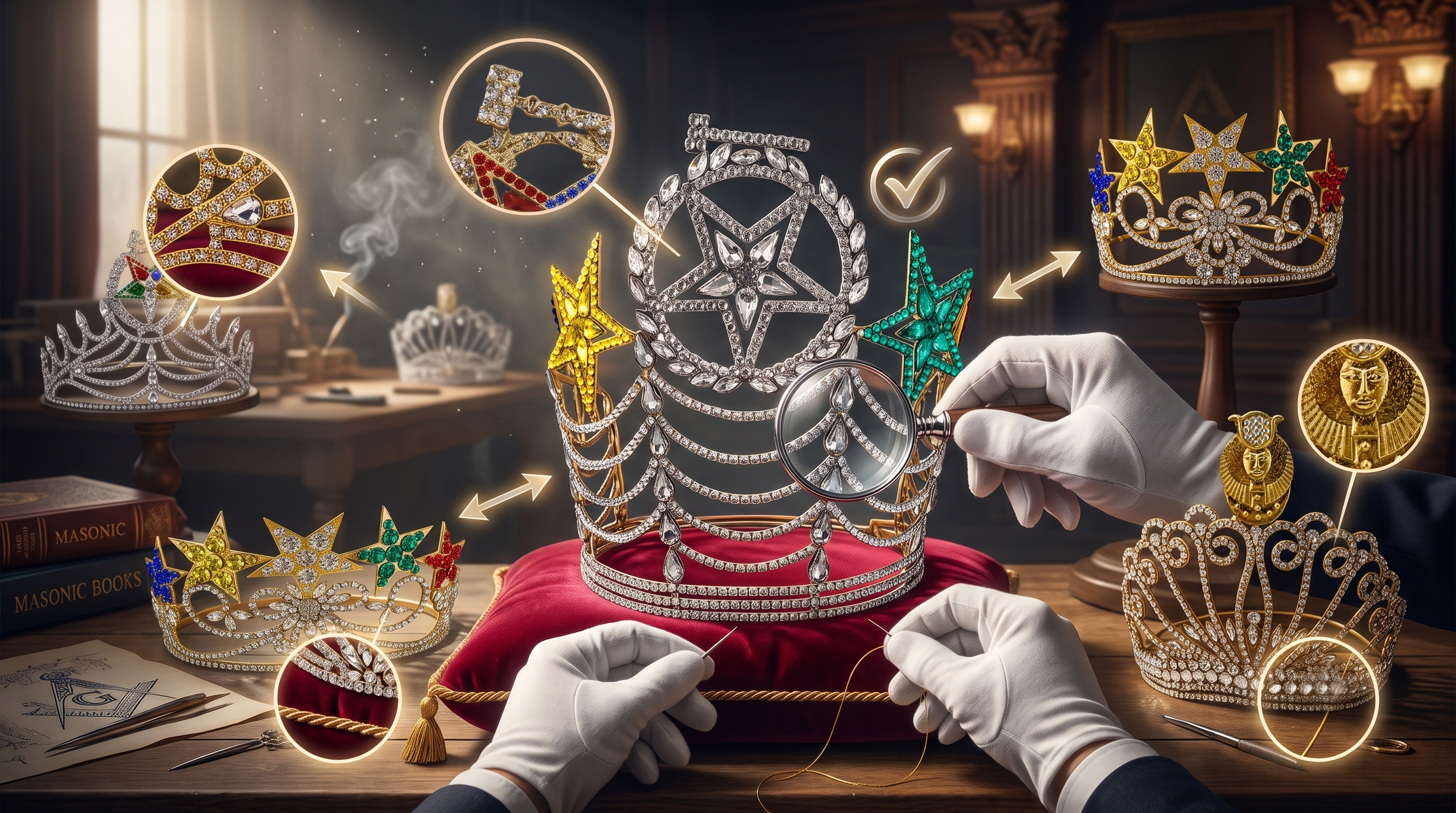
How Do I Identify Quality Masonic Crowns from Different Manufacturers?
Selecting high-quality Masonic crowns requires more than visual inspection. Many buyers encounter these items without prior knowledge—often through inheritance, collection, or initial interest in Masonic regalia—and struggle to determine authenticity, craftsmanship, and value.
At Trendwall Shop, we approach this topic from a manufacturing and evaluation perspective. A well-made crown is defined by its materials, symbolic precision, and construction methods. Understanding these elements allows buyers to distinguish between ceremonial-grade pieces and mass-produced replicas, ensuring that the item aligns with its intended use and significance.
Understanding the Role and Symbolism of Masonic Crowns
Before assessing quality, it is necessary to understand what a Masonic crown represents within Freemasonry symbols and broader ceremonial traditions.
Symbolic Meaning Across Masonic Orders
Different Masonic orders apply distinct symbolic frameworks to regalia. Crowns may represent authority, completion of degrees, or affiliation with specific rites such as the Royal Arch. These meanings are conveyed through structured iconography, often incorporating elements like the Square and Compass or other recognized emblems.
Differences Between Crowns, Jewels, and Regalia
Crowns are part of a wider system of ceremonial regalia, which includes jewels, collars, and badges. While jewels often indicate rank or office, crowns typically carry broader symbolic or decorative roles. Misidentification between these categories is common, particularly among new buyers.
Key Factors That Define the Quality of a Masonic Crown
A professional evaluation focuses on four primary areas: material composition, craftsmanship, structural integrity, and symbolic precision.
Material Composition (Gold, Silver, Brass, Stainless Steel)
Material selection directly influences durability and value. Common options include:
- Precious metals with gold plating
- Base metals such as brass
- Modern alternatives like stainless steel jewelry
While higher-purity metals increase cost, they are not always necessary. Many high-quality crowns use layered construction to balance durability and affordability.
Craftsmanship and Detailing (Etching, Engraving, Finish)
The quality of surface work is a key indicator of manufacturing standards. Look for:
- Clean, consistent engraving techniques
- Defined edges in etched symbols
- Controlled application of enamel detailing
These features reflect whether the piece was produced through a refined casting process or lower-grade mass production.
Structural Integrity and Weight
A well-constructed crown should feel balanced and solid. Lightweight pieces often indicate reduced material density or simplified construction. Proper finishing, secure joins, and consistent symmetry are signs of durable handcrafted jewelry.
Accuracy of Masonic Symbols and Design
Among experienced buyers, symbolic accuracy is often more important than material value. Incorrect proportions, misplaced icons, or inconsistent detailing can render a piece unsuitable for formal use. This is particularly relevant when evaluating fraternal insignia intended for ceremonial contexts.
How to Identify Authentic vs Replica Masonic Crowns
Distinguishing replica vs authentic items requires attention to both physical and contextual indicators.
Common Signs of Authentic Pieces
Authentic crowns typically demonstrate:
- Precise symbol alignment
- Consistent finishing across all surfaces
- Evidence of controlled manufacturing methods
- Clear connection to a recognized lodge affiliation
Indicators of Low-Quality or Mass-Produced Replicas
Lower-quality items often show:
- Shallow or inconsistent engraving
- Incorrect symbol placement
- Lightweight construction
- Generic designs lacking historical or symbolic context
These are common in bulk-produced items intended for decorative rather than ceremonial use.
Manufacturer Transparency and Provenance
Reliable manufacturers provide traceable manufacturer provenance, including information about materials, production techniques, and intended use. This is particularly important when evaluating antique Masonic items, where historical accuracy and documentation affect value.
Differences Between Manufacturers: What Really Matters
Not all manufacturers operate under the same standards. Understanding these differences helps buyers make informed decisions.
Traditional Craft Manufacturers vs Modern Production
Traditional workshops emphasize manual finishing and detail control, while modern production relies on efficiency and scalability. Both approaches can produce quality results, but the level of inspection and finishing varies.
Regional Differences in Design Standards
Design conventions may differ by region, reflecting variations in ritual practices and symbolism. Buyers should ensure compatibility with their specific organizational requirements.
Custom vs Standard Production Crowns
Custom pieces allow for precise alignment with symbolic and ceremonial needs. Standard models are more accessible but may not reflect specific traditions or preferences.
Material vs Accuracy: What Should Buyers Prioritize?
A common dilemma is whether to prioritize material value or symbolic correctness.
In practice, accuracy should take precedence. A crown made from modest materials but correctly representing its intended symbolism is more appropriate than a high-cost piece with incorrect design elements. This distinction is particularly relevant in heirloom jewelry, where meaning outweighs material composition.
Price Indicators: What a Quality Masonic Crown Should Cost
Pricing varies significantly depending on materials, craftsmanship, and origin.
Entry-Level vs Collector-Level Pricing
- Entry-level pieces: functional, lower-cost materials
- Collector-level items: higher material quality and refined detailing
How Material and Detail Affect Price
Costs increase with:
- Use of precious metals
- Complexity of engraving
- Quality of finishing processes
When Higher Price Does NOT Mean Better Quality
Higher pricing does not always indicate superior quality. Some products reflect branding or perceived value rather than actual craftsmanship. Buyers should rely on measurable attributes rather than price alone.
Common Mistakes Buyers Make When Choosing Masonic Crowns
Focusing Only on Appearance
Visual appeal alone does not guarantee accuracy or durability.
Ignoring Symbol Accuracy
Incorrect symbolism can compromise the intended purpose of the crown.
Misunderstanding Rank and Usage
Different items correspond to specific roles within Masonic regalia buying guide contexts. Selecting the wrong type can lead to improper use.
Expert Checklist: How to Evaluate a Masonic Crown Before Buying
Before making a purchase, evaluate the following:
- Are the symbols accurate and correctly positioned?
- Is the material appropriate for intended use?
- Does the craftsmanship show precision and consistency?
- Is the manufacturer transparent about production?
- Does the design align with the relevant order or affiliation?
This structured approach reduces uncertainty and supports informed decision-making.
Why Quality Matters in Masonic Regalia
Masonic items are not purely decorative. They carry historical, symbolic, and personal significance. Many pieces are retained across generations, functioning as heirloom jewelry with strong emotional value.
Ensuring quality preserves both the physical integrity of the item and the meaning it represents. Poorly made pieces may fail over time or misrepresent important symbolic elements.
Conclusion: Making an Informed and Respectful Purchase
Identifying a quality Masonic crown requires a combination of technical evaluation and contextual understanding. By focusing on materials, craftsmanship, and symbolic precision, buyers can confidently distinguish between well-made pieces and lower-grade alternatives.
Trendwall Shop recommends approaching each purchase with careful assessment rather than assumption. This ensures that the selected item meets both practical requirements and the standards expected within Masonic traditions.