


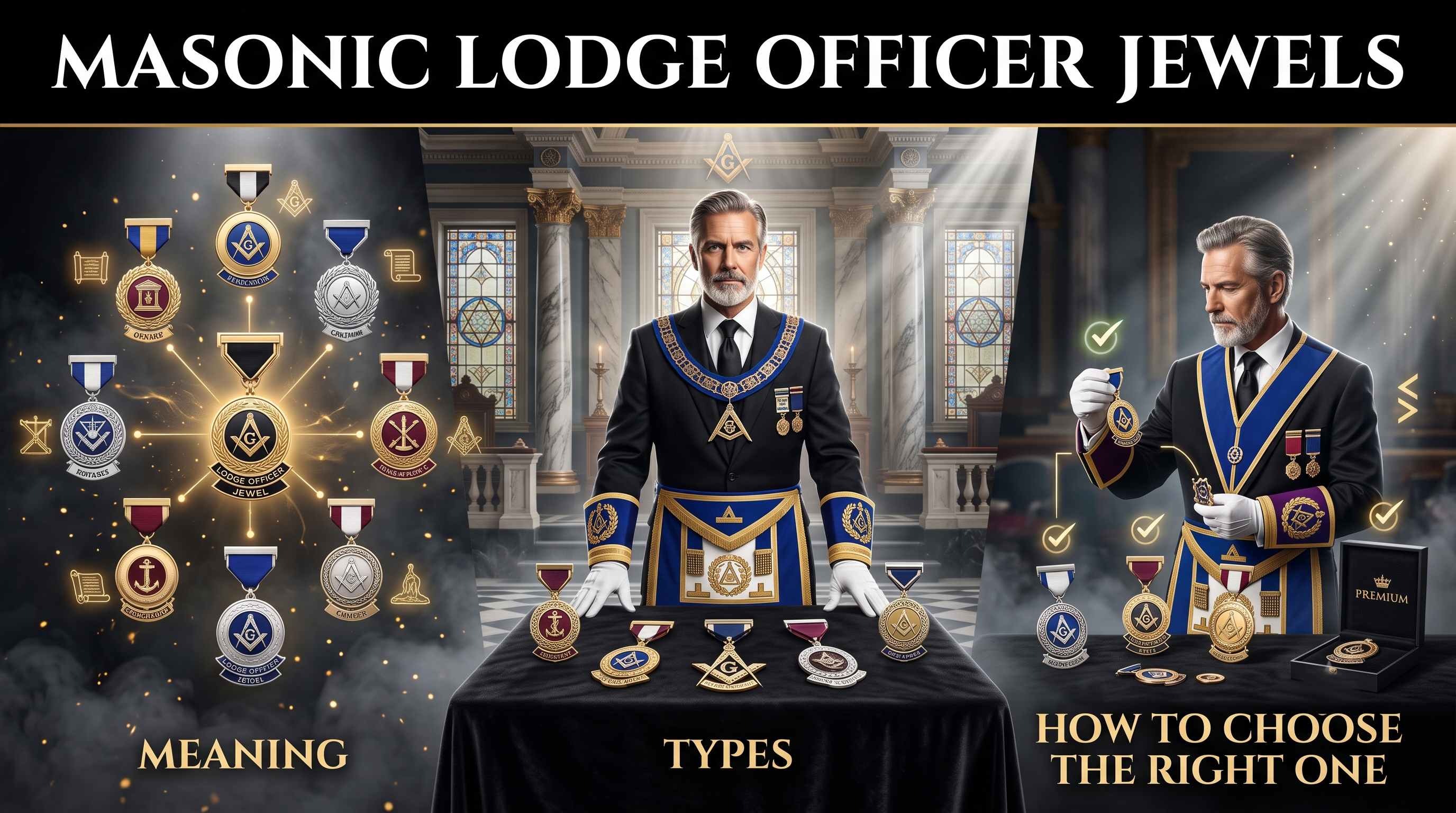
Lodge Officer Jewels
Walk into any Craft lodge on installation night, and one of the first things you notice is the jewels. Each officer standing at his position is wearing one hanging from a collar, catching the light, quietly telling everyone in the room exactly who holds which role. If you're new to Freemasonry, or you're shopping for someone who isn't, it's easy to feel a little lost. What exactly are these pieces? Why does each one look different? And how do you pick the right one?
This guide covers all of that in plain terms.
What Are Lodge Officer Jewels?
Masonic lodge officer jewels are badges worn by the officers of a Craft lodge during meetings and ceremonies. Each officer position comes with its own specific jewel a symbol that represents the duties and responsibilities of that role within lodge hierarchy.
They're worn suspended from a collar around the neck, which is why you'll also hear them called Masonic collar jewels. The jewel sits at the front, visible to all members, making it easy to identify who holds which officer position at a glance.
These aren't decorative accessories in the conventional sense. They have a functional purpose inside the lodge — they identify rank, maintain order during Masonic ceremonies, and connect the wearer to a long line of officers who held that same position before them.
The Officers and Their Jewels
Each officer jewel carries a distinct symbol tied to that role's function. Here's a breakdown of the main ones you'll come across:
Worshipful Master Jewel The Square. The Worshipful Master presides over the lodge and uses the square as his symbol — representing morality, fair dealing, and the foundation of upright conduct. This is typically the most prominent jewel in any lodge regalia collection.
Senior Warden Jewel The Level. The Senior Warden's jewel features the level, symbolizing equality among members. In lodge hierarchy, the Senior Warden assists the Master and is usually next in line for the chair.
Junior Warden Jewel The Plumb. The Junior Warden wears the plumb rule, which represents uprightness — living and acting by a straight moral standard.
Treasurer Jewel A pair of crossed keys. The Treasurer manages the lodge's finances, and the keys symbolize care, custody, and responsibility over what has been entrusted to him.
Secretary Jewel Two crossed quill pens. The Secretary handles correspondence, records, and communications — hence the writing instruments.
Deacon Jewels Both the Senior and Junior Deacon wear a jewel featuring the Dove and Olive Branch, representing their role as messengers within the lodge. The columns symbol also appears in some jurisdictions to distinguish between the two.
Steward Jewels The Stewards wear a Cornucopia — the horn of plenty — reflecting their traditional role in the lodge's hospitality and provisions.
Chaplain Jewel An open book, representing the Volume of Sacred Law.
Inner Guard and Tyler Jewels These typically feature a sword, representing their role in guarding the lodge's entrance and ensuring that only properly qualified members enter.
Past Master Jewels — A Category of Their Own
Past Master jewels deserve a separate mention because they're in a different category from current officer jewels. A Past Master jewel is presented to a Worshipful Master at the end of his year in the chair — it's a recognition of service, not a current office badge.
This makes Past Master jewels one of the most common types of Masonic presentation jewels and Masonic personalized gifts exchanged within a lodge. They're often engraved with the brother's name, the lodge name and number, and the year he served. Some are simple and traditional; others are quite elaborate depending on the lodge's custom.
If you're buying a gift for someone who's completing their year as Master, a presentation jewel — ideally personalized — is the most meaningful choice you can make.
Materials: Gold Plated, Silver, and Everything Between
Masonic officer jewels come in a range of materials, and the choice usually depends on the lodge's tradition, the officer's preference, and budget.
Gold Plated Masonic Jewels Gold plated versions are the most common. They have the warm, formal look associated with traditional Masonic regalia without the cost of solid gold. Quality varies — look for heavier plating (micron thickness matters) if you want something that holds up over years of use.
Silver Masonic Jewels Silver jewels — whether silver plated or sterling — are common in jurisdictions where that's the preferred finish. They tend to have a clean, formal appearance and are a strong choice if the recipient's lodge tradition leans toward silver regalia.
Gilt and Antique Finish Some lodges prefer an older, more traditional look. Antique gilt finishes give a jewel a sense of age and heritage — fitting for a fraternity with deep historical roots.
Custom Masonic Jewels Many suppliers offer custom design options — adding a lodge number, a specific emblem, or the officer's name. For presentation pieces especially, custom Masonic jewels are worth the extra investment.
How Jewels Are Worn
Officer jewels are worn on a collar — a wide, flat band of ribbon or fabric that sits around the neck and over the shoulders. The jewel is attached at the front. Collar and jewel are usually purchased together or matched to lodge tradition.
During the installation ceremony, the outgoing Master or Installing Officer places the collar and jewel on each new officer as they are formally installed into their position. This moment gives the jewel its significance — it's not just put on, it's presented.
Buying Guide: What to Look For
If you're purchasing officer jewels — either for yourself, for a lodge, or as a gift — here's what actually matters:
Accuracy of symbolism. Each jewel must carry the correct symbol for the office. This sounds obvious, but generic suppliers sometimes get details wrong. Buy from established Masonic regalia suppliers who specialize in lodge officer badges.
Quality of finish. Check whether the plating is thick enough for regular use. Thin plating wears quickly, especially on pieces that are handled and put on repeatedly throughout the Masonic year.
Weight and construction. A well-made jewel has some weight to it. Lightweight, hollow pieces tend to feel cheap and don't hang properly on the collar.
Jurisdiction compatibility. Different grand lodges have slightly different standards for regalia. If you're buying for a specific lodge, confirm that the style is appropriate for that jurisdiction.
Personalization options. For Past Master jewels or presentation pieces, check whether the supplier offers engraving. A name and year turns a nice piece into something that gets kept for decades.
Caring for Your Jewels
Masonic ceremonial jewels are not everyday wear, which means they can last a long time if stored properly. Keep them in a lined case or pouch — many come with one. Avoid contact with moisture, and polish occasionally with a soft cloth to maintain the finish. Gold plated pieces should not be polished with abrasive cleaners, as this strips the plating.
A Note on Masonic Tradition and Symbolism
Every symbol on every officer jewel connects to something. The Square and Compass, the Gavel symbol, the Level, the Plumb — each one carries a meaning that's explained to members through Masonic symbolism and the lodge's working. The jewels aren't worn for appearance. They're worn because they mean something to the person wearing them and to the brothers who recognize them.
That's what separates Masonic jewelry from generic fraternal merchandise. The symbolism is functional, not decorative. When a Worshipful Master puts on the Square, it's a reminder of what that office is supposed to represent — not just a badge of rank.
Final Thoughts
Lodge officer jewels are practical items with real meaning inside Masonic tradition. Whether you're an officer looking to purchase your own regalia, a lodge secretary ordering a full set, or someone buying a Past Master jewel as a gift, the principles are the same: get the symbol right, choose quality materials, and if it's a presentation piece, personalize it.
Masonic heritage runs deep, and the jewels that mark each office are part of what keeps that tradition visible and alive in every lodge meeting.