


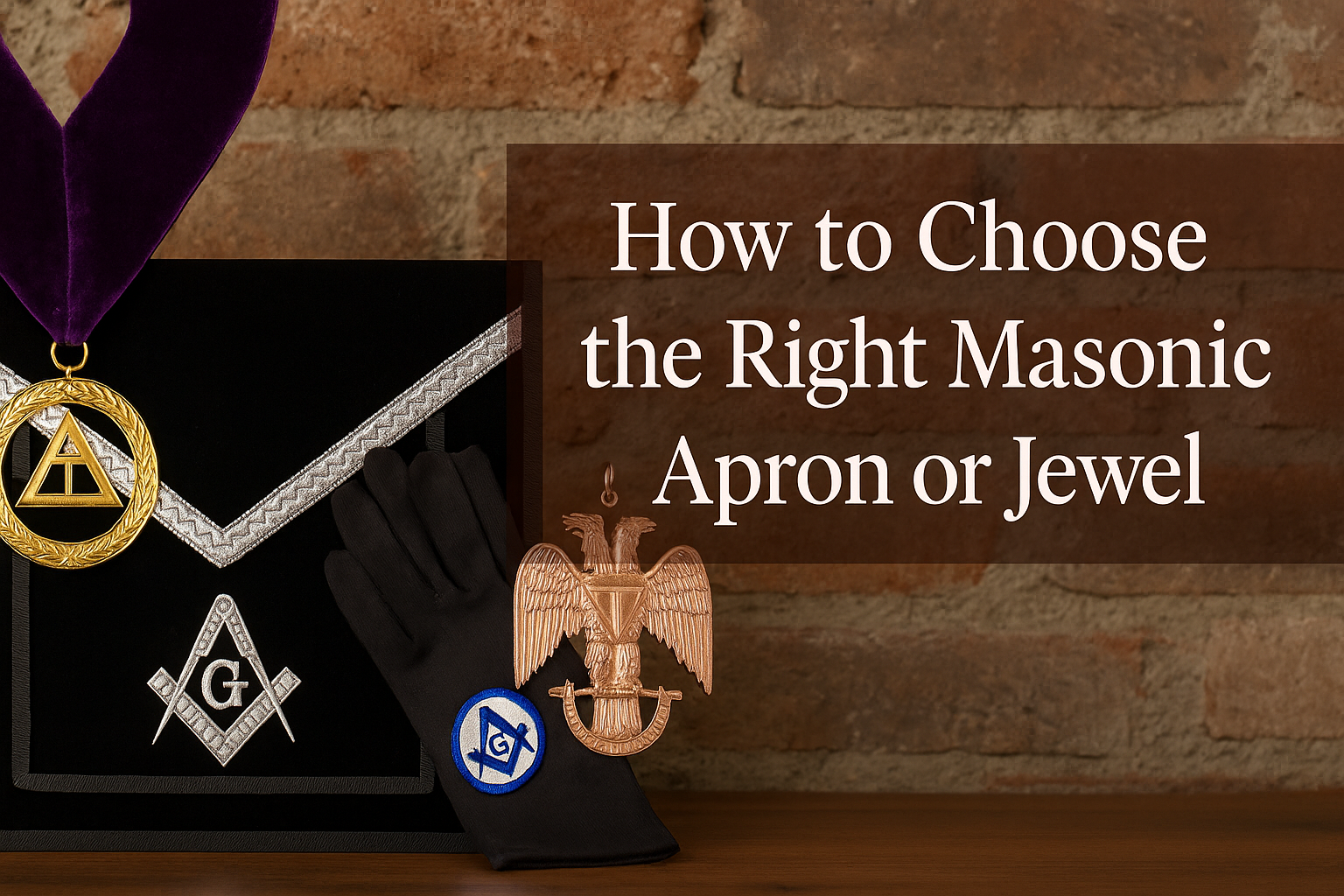
How to Choose Your Masonic Apron or Jewel
Choosing the right Masonic apron or jewel isn’t just about tradition—it’s about representing your rank, history, and commitment to the craft. Whether you're a newly initiated Entered Apprentice or a seasoned Master Mason, this guide helps you make the right regalia choice with confidence and respect.
Understanding the Symbolic Meaning of Masonic Aprons
The symbolic meaning of Masonic aprons is deeply rooted in purity, labor, and honor. White lambskin aprons, for example, symbolize innocence and the badge of a Mason's labor. The apron is the first gift a Mason receives—making it sacred and meaningful.
Types of Freemason Aprons & What They Represent
Masonic aprons vary depending on degree and jurisdiction. Here's a quick overview:
| Degree | Apron Color | Features |
|---|---|---|
| Entered Apprentice | Plain White | Basic and unadorned |
| Fellowcraft | White with Blue Trim | May include simple symbols |
| Master Mason | Elaborate designs | Velvet, embroidery, blue/silver/gold highlights |
Example: A Master Mason Blue Lodge Apron with Black Velvet and Silver Embroidery reflects high honor and is perfect for formal lodge meetings.
Choosing Regalia for Freemasons: Practical Tips
When selecting your apron or jewel, consider:
-
Your Rank (EA, FC, MM, Past Master, etc.)
-
Your Lodge’s Jurisdiction (requirements vary)
-
Ceremonial or Daily Use (choose accordingly)
-
Durability & Material Quality
For example, Past Masters often prefer more customized or embellished aprons. The Past Master Blue Lodge Apron Case with Personalization offers both protection and a personal touch.
Apron Color Significance in Freemasonry
Colors aren’t random in Freemasonry:
-
White: Purity and initiation
-
Blue: Truth, loyalty (used in Blue Lodges)
-
Red: Royal Arch and sacrifice
-
Black/Silver/Gold: Higher degrees, mourning, or spiritual authority
The Grand High Priest Royal Arch Apron with Red Velvet Fringe beautifully symbolizes leadership within York Rite bodies.
Masonic Jewel Identification by Role
Masonic jewels denote office or honor within the lodge. Common jewels include:
-
Square (Worshipful Master)
-
Plumb (Junior Warden)
-
Trowel (Steward)
These can be worn around the neck or attached to the apron. For instance, the Junior Steward Officer Apron with Navy Velvet and Silver Embroidery comes with symbols matching the steward’s jewel.
Proper Jewel for Lodge Officers
Lodge officers are expected to wear appropriate jewels for their roles. The 31st Degree Scottish Rite Collar Jewel is a striking and appropriate choice for high-ranking Scottish Rite officers.
Wearing Masonic jewels correctly signifies your respect for the Craft and awareness of tradition.
Apron Etiquette in Freemasonry
Etiquette dictates:
-
Only wear regalia suitable for your rank
-
Never modify official symbols
-
Keep your apron clean and properly stored
Using a case like the MM/WM Apron Case ensures preservation and respect for your garments.
Regalia for Different Masonic Degrees
Higher degrees demand specific regalia. Examples:
-
4th Degree Scottish Rite Apron — for Scottish Rite ceremonies
-
30th Degree Scottish Rite Collarette — denotes elevated status
-
Queen of the South Banner — represents female Freemasonry symbolism
Custom and Handmade Options
Modern Freemasons often prefer personalization:
-
Custom Aprons with initials or lodge name
-
Engraved Masonic Jewels available upon request
Personal experience: Many Masons feel a deeper connection to the Craft when wearing personalized Masonic aprons—a reminder of their unique journey.
Where to Buy Quality Masonic Regalia
Always opt for trusted sources like Trendwall Shop which offers:
-
Authentic Masonic regalia for sale
-
Freemason jewel set purchases
-
Handmade Masonic apron buy options
-
Premium Masonic regalia kits
Explore:
Expert Opinion
"Always consult your lodge’s Worshipful Master or Secretary before purchasing regalia. The right apron or jewel should match your degree and jurisdiction." – Brother T. W., 32° Scottish Rite Mason
Comparative Analysis: Master Mason vs Entered Apprentice Apron
| Feature | Master Mason | Entered Apprentice |
| Material | Velvet, Embroidery | Plain White Lambskin |
| Design | Elaborate with lodge symbols | Simple and pure |
| Usage | Formal ceremonies | Initiation and early lodge work |
Knowing the difference between Master Mason and Entered Apprentice apron helps prevent improper regalia usage.
Conclusion
Choosing the right regalia honors Freemasonry’s heritage and your personal journey. From Masonic clothing traditions to Masonic fashion rules, Trendwall Shop has everything to help you look the part with dignity and pride.
FAQs: Masonic Aprons and Jewels
1. What do the different types of Masonic aprons mean?
They represent Masonic degrees—e.g., white for Entered Apprentice, elaborate for Master Mason.
2. Can any Mason wear a decorated apron?
No, decorated aprons are reserved for specific ranks or past masters.
3. How do I know which Masonic apron is appropriate for my rank?
Check with your lodge or consult our guide above for visual and functional cues.
4. Is there a difference between aprons for Blue Lodge, Scottish Rite, and York Rite?
Yes, each rite has distinct designs, colors, and symbols.
5. Are custom aprons allowed in all lodges?
Most allow them if they comply with symbolic standards. Always verify locally.
6. What are Masonic jewels, and who can wear them?
Jewels identify lodge offices. Only designated officers should wear corresponding jewels.
7. Do different Masonic positions have specific jewels?
Yes. For example, a Senior Deacon wears a square and compasses.
8. Are Masonic jewels mandatory or symbolic?
They are symbolic but traditionally worn by officers.
9. Where do you wear Masonic jewels—on the apron or around the neck?
Generally, jewels are worn around the neck, not on the apron.
10. Can I pass down a jewel from one Mason to another?
Yes, passing jewels is a cherished tradition in many lodges.