
What Is a Mason? Meaning, Types and Freemason vs Stonemason
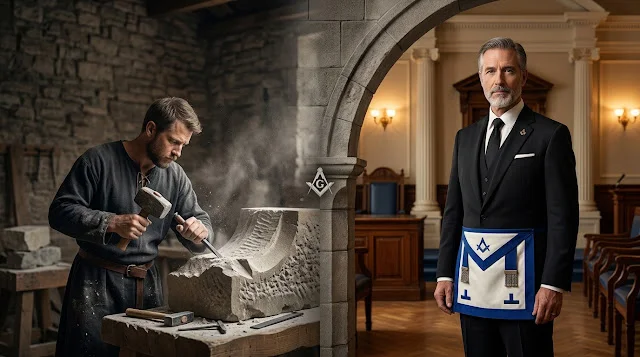
A mason is either a skilled construction worker who builds with brick, stone, or concrete, or a member of Freemasonry, a fraternal organisation built around moral values, friendship, and service. The meaning depends on the context: a stonemason works with building materials, while a Freemason belongs to a Masonic lodge.
Mason Meaning: Two Main Definitions
The word mason has more than one meaning. It is commonly used for a person who works with stone, brick, or other construction materials. It can also refer to a member of Freemasonry.
Understanding the difference is important because someone searching for "what is a mason" may be looking for information about a construction career or the Masonic fraternity.
Mason as a Tradesperson
A mason is a skilled construction worker who builds, repairs, or maintains structures using materials such as bricks, concrete blocks, natural stone, and concrete.
Masons work on walls, foundations, walkways, fireplaces, buildings, and other structures. Their work requires practical skills, knowledge of materials, accurate measurements, and the ability to follow construction plans.
Common tools include:
- Trowel
- Masonry hammer
- Chisel
- Spirit level
- Measuring tape
- Mortar board
- Masonry saw
The construction profession includes different specialities, such as brick masonry, stone masonry, block masonry, and concrete finishing.
Mason as a Freemason
A Freemason is a member of Freemasonry, a fraternal organisation that brings people together through shared traditions, ceremonies, moral teachings, friendship, and charitable activities.
Freemasons meet in groups called Masonic Lodges. These lodges provide a place for members to participate in ceremonies, discuss lodge matters, develop friendships, and support their communities. You can read the full breakdown in our guide: What Is a Masonic Lodge? Meaning, Structure, Officers and What Happens Inside.
Freemasonry uses symbols and tools from traditional stonemasonry to communicate moral lessons. For example, the Square and Compasses are widely recognised Masonic symbols. To go deeper, see Freemason Compass and Square Meaning and What Is Masonic Symbolism?
Unlike a working stonemason, a Freemason does not need to build walls or work in construction. The word refers to membership in a fraternity rather than a building profession.
Types of Masons in the Construction Industry
Masonry is a broad construction trade. Different types of masons specialise in particular materials and building tasks.
1. Stonemason
A stonemason works with natural or manufactured stone to construct, repair, and decorate buildings and other structures.
Typical tasks include cutting, shaping, carving, and fitting stones. Stonemasons may work on walls, steps, monuments, architectural features, and restoration projects.
This profession requires attention to detail because stone pieces must be measured and positioned accurately.
2. Brick and Block Mason
Brick and block masons, also known as bricklayers in many settings, build structures using bricks, concrete blocks, and similar materials.
Their work may include:
- Building interior and exterior walls.
- Constructing fireplaces and chimneys.
- Repairing damaged brickwork.
- Applying mortar between bricks and blocks.
- Following construction drawings and measurements.
Brick and block masons help create strong structures by placing materials in the correct pattern and alignment.
3. Cement Mason
A cement mason, often called a concrete finisher, works with concrete surfaces and structures.
The job may involve pouring, spreading, levelling, and finishing concrete for floors, sidewalks, driveways, foundations, and other construction projects.
Cement masons must understand how concrete behaves during placement and finishing. Weather conditions, timing, and the correct working methods can affect the final surface.
4. Refractory and Conservation Masons
Some masons develop specialised skills for particular construction environments.
Refractory masons install heat-resistant materials in places such as industrial furnaces, boilers, and other high-temperature equipment.
Conservation masons focus on repairing and preserving historic stone or masonry structures. Their work may involve matching existing materials, repairing damaged stonework, and protecting original architectural details.
These specialities require knowledge beyond ordinary bricklaying because the materials and working conditions can be different.
What Is a Freemason?
A Freemason is a member of Freemasonry, a fraternity with a long history and a system of ceremonies, symbols, and moral teachings.
Modern Freemasonry is connected historically with the traditions of medieval stonemasons. However, today's Freemasons are not required to work as builders or belong to the construction industry.
The organisation focuses on personal development, integrity, friendship, respect, charity, and service. Members meet in Masonic Lodges and take part in ceremonies that use traditional building tools as symbols.
Origin: From Medieval Stonemason Guilds
The history of Freemasonry is connected with the working stonemasons of medieval Europe.
During the Middle Ages, skilled stonemasons helped construct castles, churches, cathedrals, and other major buildings. These workers developed trade practices, shared knowledge, and organised themselves into groups or lodges.
Over time, some lodges began accepting people who were not working stonemasons. These members were interested in the traditions, philosophy, and symbolic lessons associated with the craft.
This gradual change helped shape what is known as modern speculative Freemasonry.
The exact origins of Freemasonry are still discussed by historians. However, medieval stonemason traditions are widely recognised as an important part of its background.
In 1717, four London lodges came together to form a Grand Lodge. This event is an important milestone in the development of organised modern Freemasonry.
Operative vs Speculative Masonry
The terms operative and speculative help explain the difference between traditional working masons and modern Freemasonry.
Operative Masonry
Operative masonry refers to the practical building trade. Operative masons worked with stone and other materials to construct real structures.
They used tools such as hammers, chisels, squares, and compasses to measure, shape, and position building materials.
Speculative Masonry
Speculative Masonry uses the tools and traditions of the building trade as symbols for personal and moral development.
For example, the Square can represent honesty and proper conduct, while the Compasses are associated with self-control and maintaining personal boundaries.
Modern Freemasonry is mainly speculative. Its members use the language and symbols of the building trade to explore ideas about how people should live and treat others. Lodges also use physical Masonic ritual tools and working tool sets during ceremonies and teaching.
Masonic Lodges and Grand Lodges
A Masonic Lodge is the basic local group in which Freemasons meet. Members gather for formal meetings, ceremonies, social activities, and charitable work.
A lodge may have different officers who help manage its activities. One important position is the Worshipful Master, who leads the lodge during his term of office. Lodge officers traditionally wear regalia that includes collars and Masonic jewels; you can learn more in this guide to lodge officer jewels.
A Grand Lodge is a governing organisation responsible for a group of lodges within a particular jurisdiction. It provides rules, guidance, and administration for the lodges under its authority.
Different countries and regions have separate Grand Lodges. Their membership rules, traditions, and organisational structures may vary.
The Three Degrees of Freemasonry
Traditional Craft or Blue Lodge Freemasonry has three main degrees. Each degree represents a stage in a member's Masonic journey.
1. Entered Apprentice
The Entered Apprentice is the first degree. It introduces a new member to the lodge, its traditions, and the basic principles of Freemasonry.
The degree teaches themes such as equality, responsibility, and helping people who are less fortunate.
2. Fellowcraft
The Fellowcraft is the second degree. It focuses on learning, education, knowledge, and personal improvement.
Members are encouraged to develop their abilities and continue learning throughout life.
3. Master Mason
The Master Mason is the third degree and the final degree of traditional Craft Freemasonry.
It explores themes such as human life, personal responsibility, and using time wisely. After completing this degree, a member is recognised as a Master Mason. Many Master Masons choose a dedicated Master Mason apron to mark this achievement.
Some Master Masons later choose to join additional Masonic organisations, such as the Scottish Rite or York Rite. These are separate paths and are not required to complete the three Craft degrees.
Symbols: Square and Compasses
The Square and Compasses are among the most recognised symbols of Freemasonry.
They come from the tools used by traditional stonemasons but have symbolic meanings in modern Masonic teachings.
The Square
The Square is commonly associated with honesty, fairness, and proper conduct. It reminds members to act fairly and treat others with respect.
The Compasses
The Compasses are associated with self-control, discipline, and maintaining personal boundaries. They encourage members to manage their behaviour and actions.
The Letter G
In some Masonic traditions, the letter G appears between the Square and Compasses. It may represent Geometry and, in certain jurisdictions, references to God or the Great Architect of the Universe. Its interpretation can vary.
These symbols are used in Masonic settings to communicate ideas about character, responsibility, and personal conduct. For a complete explanation, read Freemason Compass and Square Meaning: A Complete Guide to Masonic Symbolism.
Mason vs Freemason: Key Differences
Although the words are related, a mason and a Freemason are not the same thing.
|
Feature |
Mason (Tradesperson) |
Freemason |
|---|---|---|
|
Meaning |
Skilled construction worker |
Member of Freemasonry |
|
Main purpose |
Building and repairing structures |
Personal development, fellowship, and service |
|
Workplace |
Construction sites, buildings, and workshops |
Masonic Lodges and community settings |
|
Tools |
Trowels, hammers, chisels, and levels |
Symbolic tools such as the Square and Compasses |
|
Skills |
Construction, measurement, and material handling |
Knowledge of Masonic traditions and participation in lodge activities |
|
Training or membership |
Trade training or apprenticeship may be required |
Application and acceptance by a Masonic Lodge |
|
Main activities |
Building walls, structures, and stonework |
Lodge meetings, ceremonies, fellowship, and charity |
The main difference is that a tradesperson uses masonry skills to build physical structures, while a Freemason belongs to a fraternity that uses building traditions as symbols for moral lessons.
What Does a Mason Do?
The responsibilities of a mason depend on which meaning of the word is being used.
Duties of a Construction Mason
A construction mason works with building materials to create or repair structures.
Common duties include:
- Reading construction plans and measurements.
- Preparing surfaces and foundations.
- Mixing mortar or grout.
- Cutting and shaping bricks or stones.
- Building walls and other structures.
- Checking alignment with levels and measuring tools.
- Repairing damaged masonry.
- Cleaning and finishing completed work.
Masons may work outdoors or indoors, depending on the project. The work can involve physical activity, handling heavy materials, and using specialised tools.
What Does a Freemason Do?
A Freemason takes part in activities organised by their lodge and follows the principles and traditions of Freemasonry.
Common activities include:
- Attending regular lodge meetings.
- Taking part in Masonic ceremonies.
- Learning about Masonic history and symbolism.
- Building friendships with other members.
- Supporting charitable causes.
- Participating in community service.
- Helping with lodge events and activities.
The exact activities depend on the lodge, its members, and its local community. Many members also wear Masonic regalia during meetings. If you are choosing one, see How to Choose a Masonic Apron and browse Blue Lodge aprons.
Freemasonry is not a construction job. A member does not need to build houses, work with stone, or have professional masonry experience.
How to Become a Mason
The process depends on whether you want to become a construction mason or a Freemason. These are two different paths.
How to Become a Stonemason or Bricklayer
If you want to work in the construction industry, you can begin by learning the skills required for masonry.
Common steps include:
1. Learn about the trade: Understand the differences between bricklaying, stone masonry, block masonry, and concrete finishing.
2. Find training: Look for a vocational course, trade school, or apprenticeship programme.
3. Develop practical skills: Learn how to measure, mix mortar, cut materials, and use masonry tools safely.
4. Gain work experience: Work with an experienced mason to improve your construction skills.
5. Build your specialisation: With experience, you may focus on stonework, brickwork, restoration, or another area.
Requirements and qualifications vary by country and employer.
How to Become a Freemason
If you are interested in joining Freemasonry, the usual starting point is to contact a recognised Masonic Lodge or Grand Lodge in your area.
The general process includes:
1. Learn about Freemasonry: Understand its values, traditions, and membership expectations.
2. Find a local lodge: Use an official Grand Lodge website or contact its membership office.
3. Meet members: Ask questions and learn about the lodge's activities.
4. Submit an application: Complete a membership petition if you decide to apply.
5. Attend an interview: The lodge may arrange an investigation or meeting.
6. Wait for the decision: The lodge follows its rules to consider your application.
7. Begin the degrees: If accepted, you start as an Entered Apprentice and may progress through the three degrees.
Membership requirements can differ by jurisdiction. Age, belief, sponsorship, and other eligibility conditions should be checked with the relevant Grand Lodge before applying. For a detailed walkthrough, read How to Become a Freemason: Requirements, Steps, Cost & Timeline (2026).
Frequently Asked Questions About Masons
Is a mason the same as a bricklayer?
Not exactly. A bricklayer is a type of mason who specialises in building with bricks and similar materials. The word mason can also include stonemasons, block masons, and other construction specialists.
What is the difference between a mason and a Freemason?
A mason can refer to a construction worker who builds with brick, stone, or concrete. A Freemason is a member of the fraternal organisation known as Freemasonry. Modern Freemasons use building tools and traditions as symbols for moral teachings.
What does a Freemason do?
A Freemason attends lodge meetings, participates in ceremonies, learns about Masonic traditions, builds friendships, and may take part in charitable and community activities. The activities depend on the individual Masonic lodge.
Is Freemasonry a religion?
No. Freemasonry is a fraternal organisation, not a religion. It does not replace a member's personal faith. Some traditional Masonic jurisdictions have a belief requirement, but the exact rules depend on the organisation.
Can a woman be a Mason?
Yes, women can join certain Masonic organisations. Some organisations have women-only membership, while others are mixed-gender. Traditional Grand Lodges may have different membership rules, so applicants should check the organisation they are interested in joining.
How do you become a mason?
If you want to become a construction mason, you can pursue trade training or an apprenticeship and gain practical experience. If you want to become a Freemason, contact a recognised local lodge, check its requirements, and follow its membership application process.
Conclusion
The word mason has two important meanings. It can describe a skilled construction worker who builds with stone, brick, or concrete, or a member of Freemasonry, a fraternity based on traditions, moral teachings, friendship, and service.
Although modern Freemasonry has historical connections with medieval stonemasons, the two roles are different. A construction mason builds physical structures, while a Freemason participates in lodge traditions and community activities.
Understanding this difference helps you find the information you need, whether you are exploring a construction career or learning about Freemasonry and its symbols. Explore more guides on Nexovista, and if you are looking for lodge regalia, visit the Trendwall Masonic regalia shop.